
Commissioning and Technical Services for Complex Facilities
Catalyst Commissioning Group is an independent, third-party commissioning firm. We verify that buildings do what they were designed to do—and when a project needs more than verification, we bring the engineering depth to analyze systems, investigate failures, certify containment and put our name on the findings. From K-12 schools and tenant fit-outs to hospitals, semiconductor plants, BSL-4 research laboratories and data center campuses, we do the technical work that keeps projects moving and systems working. Engaged early, we reduce risk at every phase, from the owner’s first requirements through design, construction, turnover and years of operation.
Discuss Your Project →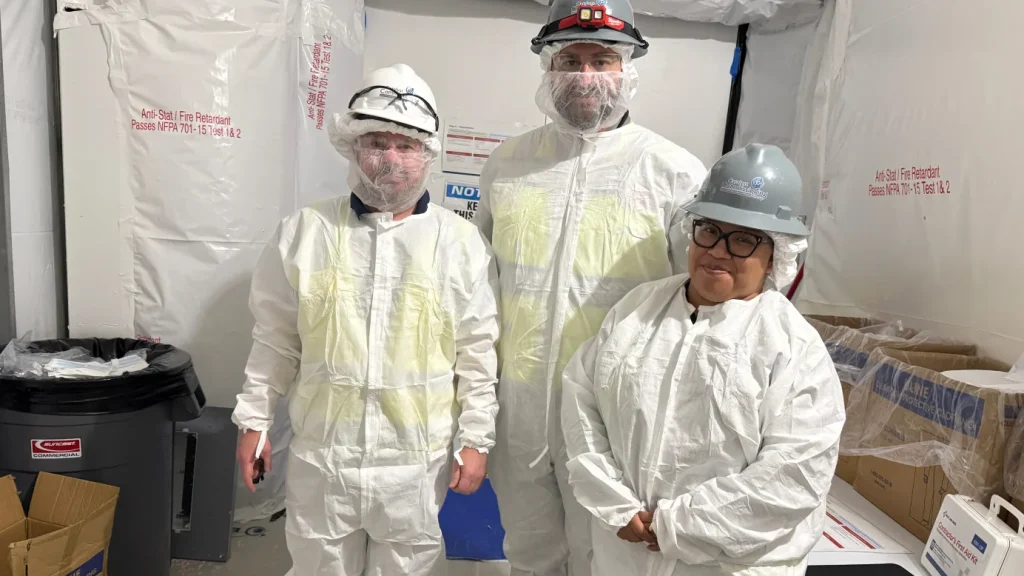
Independent by design.
Catalyst does not design your systems, install them or sell the equipment that goes into them. We hold no contractor affiliations and no product lines. That means we have no interest in your project except whether it performs, and no reason to soften a finding, defer to a schedule or look away from a problem. Owners hire us for exactly that reason, and contractors work with us for the same one: an independent finding is the only kind anybody trusts.
We have been in your shoes. Our team came up as facility operators, design engineers, construction managers, controls programmers and field technicians. We know what it costs to chase a problem after turnover, what schedule pressure feels like from inside a GC trailer, and what an operations team is actually handed on day one. That perspective is why our reports get read and our recommendations get built.
Buildings Where the Systems Have to Be Right
Every building has systems. Some buildings have consequences. Our work concentrates where a mechanical failure means downtime, contamination, a failed inspection or a closed facility.
-
Mission-Critical & Data Centers
Redundancy, power density and cooling verified under load, before the first server rack goes live.
-
Healthcare
Pressure relationships, air change rates and life-safety systems that hold up under survey and under stress.
-
Higher Education
Campus standards, aging central plants and research buildings that have to do everything at once.
-
Life Sciences & Pharmaceutical
Environments where product, protocol and regulator all depend on the systems performing exactly as documented.
-
Biocontainment
BSL-3 and BSL-4 facilities where containment is not a feature of the building — it is the point of it.
-
K-12 Schools
Ventilation, comfort and energy performance delivered on a school-year calendar and a public budget.
-
Federal
Documentation, security and compliance requirements met the way agencies require them, the first time.
Traditional Commissioning
Commissioning is the discipline of proving a building does what it was designed to do. We write down what the owner actually needs, review the design against it, verify installation in the field, test systems individually and then together, and hand over a facility your operations team can run from day one.
It is methodical, unglamorous, documented work. It is also the foundation everything else on this page is built on, and we do not treat it as a commodity.
The earlier Catalyst is engaged, the more we catch while it is still on paper. A gap in the Owner’s Project Requirements, an assumption in the Basis of Design that does not match how the facility will actually be operated, a conflict between the drawings and the specifications; during design, each is resolved with a redline. Found in the field, the same issue means demolition, rework, re-inspection and lost schedule. Found after turnover, it adds downtime and warranty disputes on top of all of that. Commissioning that begins at project inception moves discovery to the point where correction costs the least, which is how it streamlines delivery and protects the schedule and the budget.
-
New Construction Commissioning
From design review through turnover, we verify that every system is installed, started and tested against the owner’s requirements, so problems surface while they are still cheap to fix.
-
Building Envelope Commissioning
We test and verify the roof, walls, glazing and air barrier to catch the water intrusion and air leakage that drive the most expensive callbacks in construction.
-
Owner’s Project Requirements (OPR) Development
We help you put in writing what success means for the building, in measurable terms, so the design team, the contractors and every test that follows are all aiming at the same target.
-
Commissioning Specifications
We write the commissioning sections of your project manual, so scope, responsibilities and testing expectations are contractual obligations rather than assumptions.
-
Functional & Integrated Systems Testing
We run equipment through its full range of operation, then test systems together—because the failures that matter most only appear when HVAC, electrical, controls and life safety have to cooperate.
-
Commissioning Design Review
An independent read of drawings and specifications before construction, catching coordination conflicts, missing sequences and unbuildable details while they are still redlines.
-
Whole Building Commissioning
A single coordinated scope covering every system in the facility, rather than a handful of pieces reviewed in isolation and hoped to work together.
-
Re-Commissioning
For buildings already commissioned once, we re-verify performance and restore systems that have quietly drifted away from their original sequences.
-
Retro-Commissioning
For buildings never commissioned at all, we find where they are wasting energy and underperforming, then correct it through tuning and repair instead of a capital project.
-
Ongoing & Continuous Commissioning
A standing program that keeps systems tuned year over year, so performance does not decay in the gap between projects.
-
LEED Fundamental & Enhanced Commissioning
We deliver the commissioning scope USGBC requires at either level, with documentation assembled the way reviewers expect to receive it.
-
Systems Manual Development
The operating documentation your facility team will actually use—sequences, setpoints, procedures and the reasoning behind them—in one place instead of a shelf of binders.
-
Factory Acceptance & Witness Testing
We witness testing of major equipment at the manufacturer’s plant, so defects are found before it ships rather than after it is rigged into place.
Beyond Commissioning:
Specialized Technical & Advisory Services
Complex facilities generate problems a standard commissioning scope was never written to solve. A control system nobody in the building understands. A chiller that keeps tripping and no one can say why. A containment barrier that has to be certified before research can restart. A failure that is heading toward a claim or a courtroom.
This is the work owners call us back for, and it is where Catalyst is different from a firm that only commissions. Our licensed professional engineers, controls specialists, forensic investigators and former operators go where the technical difficulty is highest and the consequences of getting it wrong are worst.
-
Systems Assessment & Performance Analysis
MEP Systems Assessments · Controls & BAS Assessments · Building Automation System Trend Analysis · Monitoring-Based Commissioning (MBCx) & Fault Detection · Energy Audits & Performance Verification · Facilities Condition Assessments · Integrated Fire Alarm System Evaluations · Submetering Plan Development & Execution · Sustainability & Carbon Analysis
Explore Services +: Systems Assessment & Performance Analysis -
Construction Quality & Technical Testing
QA/QC Management & Construction Support · Independent Third-Party Verification · Medium & Low Voltage Electrical Witness Testing · Electrical Torque Inspection & Verification · Non-Destructive Examination (NDE) · Building Envelope Testing · Test & Balance Coordination · Offsite Fabricator & Integrator Inspections · Load Bank & Thermal Load Testing · Flushing Procedure Review & Inspection
Explore Services +: Construction Quality & Technical Testing -
Biocontainment, Certification & Regulatory Compliance
Biocontainment Certification · Boundary Integrity Testing · Biosafety Laboratory Validation & Recertification · Regulatory Compliance Support (NIH, CDC, FDA)
Explore Services +: Biocontainment, Certification & Regulatory Compliance -
Forensic Investigation & Litigation Support
Forensic Analysis & Failure Investigation · Root Cause Investigation · Litigation Support & Expert Testimony · Construction Defect Investigation · Technical Due Diligence
Explore Services +: Forensic Investigation & Litigation Support -
Owner’s Advisory & Operational Readiness
Owner’s Advisory Services · Owner Technical Representation · Operational Readiness Support · Operations & Maintenance Training · Capital Renewal & Decarbonization Planning · Warranty Phase Support · Repair Scope Procurement & Bidding Support
Explore Services +: Owner’s Advisory & Operational Readiness -
Emerging & Specialized Systems
Direct-to-Chip Liquid Cooling Commissioning · Renewable Energy Systems Integration · Virtual Power Plant Commissioning · District Energy & Microgrid Systems
Explore Services +: Emerging & Specialized Systems
Sometimes What You Need Is a Person,
Not a Scope
Not every gap is a project. Sometimes a program needs a mechanical systems manager for eight months, a QA/QC director through a build-out, a controls integrator who can read someone else’s code, or an interim chief engineer while a search runs.
Catalyst places credentialed, vetted technical professionals directly into owner and contractor teams for weeks or for years. They arrive ready to work, they integrate with your existing staff and they leave when the need ends. No recruiting cycle, no long-term employment commitment.

Construction Phase
- Mechanical and electrical systems managers and engineers
- Plumbing and fire protection specialists
- MEP system auditors and inspectors
- QA/QC managers, program directors, auditors and inspectors
- BAS, DCS, EPMS and PLC programming and integration specialists
- Sequence of operations development, graphics and trending configuration
- Alarm inventory, optimization, assignment and testing
- Pre-construction, pre-design strategy and constructability review
- Project engineers and document control support
- Startup coordination, deficiency management and closeout
Operations Phase
- Interim chief engineers and facility directors
- Mechanical and electrical engineering professionals
- Controls and automation technicians, BAS administrators
- Energy management and sustainability specialists
- Maintenance planning coordinators, planners, schedulers and estimators
- Capital projects managers
- Critical facilities operations (data centers, laboratories)
- Central plant optimization specialists
- Biosafety operations support (BSL-3 / BSL-4)
- Mission-critical infrastructure management
Engagement Models
-
Short-Term Project Support
Weeks to months, covering a specific project phase or a technical problem that needs a specialist.
-
Interim Leadership
Months to years, filling a leadership gap during recruitment, transition or reorganization.
-
Ongoing Partnership
Long-term embedded support for portfolio management, standards development or continuous improvement.
Every Seat at the Table
Catalyst is engaged by every party to a project, which is part of what makes our position useful. We understand what each side is measured on, and we translate between them.
- Building owners, developers and capital planning teams
- Facilities, operations, plant and utilities teams
- Single and multi-tenant organizations, including data center tenants
- General contractors and construction managers
- MEP, envelope and specialty subcontractors, fabricators and integrators
- Architects, engineers and other commissioning firms
- Insurers, risk managers and legal counsel
- Energy, water, carbon and sustainability managers
Results You Can Expect
Every phase of a project carries risk, and the cost of addressing it rises with each phase that passes. Our value lies in moving discovery earlier: into the requirements, the design and the specifications, where a correction takes hours instead of weeks. The result is a project delivered with less rework and fewer surprises, and a facility that begins producing what it was built for—revenue, research, patient care or instruction—on the day it was scheduled to.
- Issues resolved in the Owner’s Project Requirements, Basis of Design, drawings and specifications, where a correction is a redline rather than rework in the field
- Streamlined project delivery that supports on-time, on-budget completion
- Revenue-generating capability delivered on schedule and performing at or above design intent, whether that means IT capacity, patient beds, laboratory space or classrooms
- Reduced rework and fewer warranty callbacks
- Extended equipment life and deferred capital replacement
- Lower operating costs through systems that run the way they were designed to
- Reduced energy and water consumption, and reduced operational and embodied carbon, measured and documented with data that holds up to reporting
- Risk mitigated through independent, third-party verification at every phase of the project lifecycle
- Documentation that supports warranty claims, acceptance and, if it comes to it, a claim
- A clean turnover, with an operations team that knows the building before they inherit it
I wanted to let you know that [Catalyst Commissioning Group] did an extraordinary job for the Penn Perelman School of Medicine on our ABSL3 and BSL3 project as a commissioning agent. These projects were run simultaneously, and they were one of the most complicated projects ever undertaken by the University.
[Catalyst Commissioning Group] showed dedication to the project with [their] attendance to multiple midnight and early morning failure scenarios in these operational research buildings. [They] always had suggestions and was 100% qualified to commission BSL3 level labs and vivariums. [Their] insight and guidance helped everyone involved get through and complete these complicated projects. With [their] help, we were one of the first BSL3 labs in the country to have zero reversal of airflow during all of our failure scenarios.